Thursday, June 14, 2012

E39 BMW 528i 5-Series GM Automatic Transmission Service - "Lifetime Fluid" Myths

To contact us Click HERE
Valvoline Oil Change Locations - E39 BMW 528i 5-Series GM Automatic Transmission Service - "Lifetime Fluid" Myths.

Do you know about - E39 BMW 528i 5-Series GM Automatic Transmission Service - "Lifetime Fluid" Myths

Valvoline Oil Change Locations ! Again, for I know. Ready to share new things that are useful. You and your friends.What I said. It is not outcome that the actual about Valvoline Oil Change Locations . You check this out article for information on anyone need to know is Valvoline Oil Change Locations .

How is E39 BMW 528i 5-Series GM Automatic Transmission Service - "Lifetime Fluid" Myths

E39 BMW 528i 5-Series GM Automatic Transmission Service - "Lifetime Fluid" Myths Tube. Duration : 8.38 Mins.

We had a good read. For the benefit of yourself. Be sure to read to the end. I want you to get good knowledge from Valvoline Oil Change Locations .MORE INFO HERE: I've done a lot of research on the mysterious "lifetime fill" fluid that BMW used in these cars, and determined accordingly how to approach the situation of servicing one of these automatic transmissions. With the obvious adaptations such as fluid capacity, filter model, etc.- this video can apply to any BMW which has a "lifetime fluid" and a GM transmission. After the servicing was complete, the transmission shifts quicker and particularly improved a mild 5th-to-4th shift harshness. About 3000 miles have past since this service was done and the car continues to work great, which included some 'spirited' driving. After careful consideration, I have no doubt that performing this service will extend the life of these transmissions. I consider it a huge mistake on BMW's part to say that any fluid in a vehicle is good for the life of the vehicle. I would suggest doing a drain/fill 2-3 times over a short period in order to get as much old fluid out as possible. Changing the filter just once during this time should be OK. I was able to get approximately 6 quarts out of the transmission on the first drain (which included a long period of sitting and dripping). This transmission holds about 10 quarts total, so after 2-3 drain/fills (depending on fluid age), the fluid should be a nice cherry red color. Then, after this you can go back to servicing the transmission every 25k miles. NEW MAY 2012: car had some all-too-common reversing issues late last year, turned out ...I hope you have new knowledge about Valvoline Oil Change Locations . Where you may put to use within your day-to-day life. And most importantly, your reaction is Valvoline Oil Change Locations .View Related articles associated with Valvoline Oil Change Locations . I Roll below. I actually have suggested my friends to assist share the Facebook Twitter Like Tweet. Can you share E39 BMW 528i 5-Series GM Automatic Transmission Service - "Lifetime Fluid" Myths.

Related Articles


Using Character Sheets in Fiction Writing

To contact us Click HERE
Change Locations - Using Character Sheets in Fiction Writing.
The content is good quality and useful content, Which is new is that you never knew before that I know is that I even have discovered. Prior to the distinctive. It is now near to enter destination Using Character Sheets in Fiction Writing.

Do you know about - Using Character Sheets in Fiction Writing

Change Locations ! Again, for I know. Ready to share new things that are useful. You and your friends.

Writing fiction is a bit like baking a cake. You need the right ingredients in the right amounts, or it will turn out awful. For fiction, you need the right combination of plot, action, description and character development to bring your story to life for your reader.

What I said. It isn't outcome that the actual about Change Locations . You look at this article for information about a person wish to know is Change Locations .

How is Using Character Sheets in Fiction Writing

We had a good read. For the benefit of yourself. Be sure to read to the end. I want you to get good knowledge from Change Locations .

Character development can be one of the most important things about writing fiction. You want to create a realistic group of characters to move your plot along and to do that you need to know them. But how much do you really have to know about them before you start writing?

Well, that depends on the kind of story you are writing. The length of your tale will dictate the amount of character information you will need to make them come to life. For simplicity's sake, I've broken my character sheet down into what I use for each type of writing. Your character sheets may vary.

Flash Fiction

Writing flash fiction is one of the hardest types of writing. You have to create a story with just the minimum of words and it has to make sense. For most flash fiction, you only need the most basic character information.

Name:

Age:

Height:

Weight:

Hair color and style:

Eye color:

Complexion and skin tone:

Character's body build:

These should be enough to create a flash fiction character.

Short Stories

Short stories have a higher word count, so the characters in those should be more developed. You have more leeway with your character's descriptions and can even give background information, which will make them more real for your readers. Use the above information and add the following:

Character back story:

Identifying marks:

Facial features:

Hand features:

Scent:

Mannerisms or gestures:

Novellas and Novels

Novellas and novels require the most detailed characters because they are as much character driven stories as plot driven. Character sheets with more detailed physical description, personality traits, and an extensive background will go a long way to making your story one that pulls a reader in and keeps them reader from beginning to end. Use all of the above plus the following:

Strongest personality traits:

Weakest personality traits:

Needs of the character:

Ambitions:

Father's name:

Age:

Physical appearance:

Mother's name:

Age:

Physical appearance:

Sibling's names and descriptions:

Favorite sayings:

Interests and hobbies:

Favorite foods:

Favorite colors:

Pets:

Education:

Religion:

Financial situation:

Future plans:

Possessions this character values most:

What drives your character:

How does your character handle conflict:

What is standing in your character's way:

What is their favorite room and why:

What vehicle do they drive:

Favorite sport(s):

What are your character's prejudices:

How does your character feel about love:

About crime:

What is their neighborhood like:

What is your character's philosophy on life:

What is your character's family life like:

You also should have a rough background and timeline for this character, from childhood through the start of the story. Break it down into 5 year spans, unless your character is fairly old, then go with 10 year spans. Finally, have a profile summary, taking everything you have for the character and write up a one or two paragraph summary. It is a good way to focus your character's information, and could be used in your story.

Book Series

When writing a series of books about the same characters, it is imperative to keep some kind of record of their traits. Do not rely on your memory when it comes to writing each book. As an avid reader of series books, it is amazing the number of times a character's eyes have been dark blue in one book and dark brown in another then gone back to blue. While most casual readers won't catch that kind of mistake, your dedicated readers will. It costs you nothing to keep a notebook with your character sheets and reference it when writing the next book in your series. It will go a long way to keep the continuity of your books intact.

A note on describing clothing. Unless clothing change is crucial to your story's plot limit your fashion descriptions. You do not need to tell every single piece of clothing your character is wearing. A basic idea of their attire is enough for most readers.

Your characters are as important to your story as your plot. Developing them will help bring your tale to life, but taking the time to plan them out prior to writing is a great way to make them real to you and your reader.

I hope you obtain new knowledge about Change Locations . Where you possibly can put to used in your day-to-day life. And most importantly, your reaction is Change Locations .View Related articles associated with Change Locations . I Roll below. I even have recommended my friends to assist share the Facebook Twitter Like Tweet. Can you share Using Character Sheets in Fiction Writing.

Related Articles


3M™ Fuel System Tune-Up Kit

To contact us Click HERE
Valvoline Oil Change Locations - 3M™ Fuel System Tune-Up Kit.

Do you know about - 3M™ Fuel System Tune-Up Kit

Valvoline Oil Change Locations ! Again, for I know. Ready to share new things that are useful. You and your friends. What I said. It isn't outcome that the actual about Valvoline Oil Change Locations . You look at this article for facts about that want to know is Valvoline Oil Change Locations .

How is 3M™ Fuel System Tune-Up Kit

3M™ Fuel System Tune-Up Kit Tube. Duration : 6.43 Mins.

We had a good read. For the benefit of yourself. Be sure to read to the end. I want you to get good knowledge from Valvoline Oil Change Locations . Do-it-yourself version of one of 3M's professional fuel system cleaners. 3 part kit. Contains Instructional DVD, Intake System Cleaner, Throttle Plate Cleaner and Complete Fuel System Cleaner Features and Benefits: * Perform a professional-style fuel system cleaning at home. * About as easy to do an an oil change. * Improve fuel economy, power and performance. Buy direct from 3M: bit.ly I hope you have new knowledge about Valvoline Oil Change Locations . Where you'll be able to offer easy use in your everyday life. And most importantly, your reaction is Valvoline Oil Change Locations . View Related articles associated with Valvoline Oil Change Locations . I Roll below. I actually have recommended my friends to assist share the Facebook Twitter Like Tweet. Can you share 3M™ Fuel System Tune-Up Kit.

Ford Vacuum Modulators and Oil I Use

To contact us Click HERE
Valvoline Oil Change Locations - Ford Vacuum Modulators and Oil I Use.

Do you know about - Ford Vacuum Modulators and Oil I Use

Valvoline Oil Change Locations ! Again, for I know. Ready to share new things that are useful. You and your friends.What I said. It isn't outcome that the actual about Valvoline Oil Change Locations . You see this article for home elevators that wish to know is Valvoline Oil Change Locations .

How is Ford Vacuum Modulators and Oil I Use

Ford Vacuum Modulators and Oil I Use Tube. Duration : 8.32 Mins.

We had a good read. For the benefit of yourself. Be sure to read to the end. I want you to get good knowledge from Valvoline Oil Change Locations .Changing the modulator on my truck and showing the oil I told monkeypumper420 about for his trans. The modulator didnt fix the problem btw. So the f100 is still not working good.I hope you get new knowledge about Valvoline Oil Change Locations . Where you'll be able to offer use within your everyday life. And just remember, your reaction is Valvoline Oil Change Locations .View Related articles associated with Valvoline Oil Change Locations . I Roll below. I even have counseled my friends to help share the Facebook Twitter Like Tweet. Can you share Ford Vacuum Modulators and Oil I Use.

Related Articles


Clio 1.5 DCi EGR Valve Maintenance

To contact us Click HERE
Valvoline Oil Change Locations - Clio 1.5 DCi EGR Valve Maintenance.

Do you know about - Clio 1.5 DCi EGR Valve Maintenance

Valvoline Oil Change Locations ! Again, for I know. Ready to share new things that are useful. You and your friends.What I said. It is not outcome that the real about Valvoline Oil Change Locations . You see this article for info on anyone need to know is Valvoline Oil Change Locations .

How is Clio 1.5 DCi EGR Valve Maintenance

Clio 1.5 DCi EGR Valve Maintenance Video Clips. Duration : 4.55 Mins.

We had a good read. For the benefit of yourself. Be sure to read to the end. I want you to get good knowledge from Valvoline Oil Change Locations .Finding, removing, cleaning and replacing the exhaust gas recirculation valve on my 2001 Clio. It was hesitating on accelerating and blowing out loads of black smoke (unburnt fuel). A brief web search and I found out that a clogged EGR valve could be the cause of the problem. After finding out how straightforward it was t to remove and replace, I had a go myself - instant improvement!I hope you obtain new knowledge about Valvoline Oil Change Locations . Where you may put to used in your life. And most of all, your reaction is Valvoline Oil Change Locations .View Related articles associated with Valvoline Oil Change Locations . I Roll below. I even have recommended my friends to assist share the Facebook Twitter Like Tweet. Can you share Clio 1.5 DCi EGR Valve Maintenance.

Related Articles


Wednesday, May 30, 2012

Brain Cancer - Sign and Symptoms

To contact us Click HERE

Brain Cancer - Sign and Symptoms
Definition of Brain Cancer
Brain cancer is a disease of the brain where cancer cells (dangerous) grown in brain tissue. Cancer cells grow to form a mass of cancerous tissue (tumor) that interferes with brain tissue functions such as muscle control, sensation, memory, and bodily functions normal. Tumors composed of cancerous cells called tumors danger (malignant), and which consists of cells that are not cancer (noncancerous) are called benign tumors (benign). Cancer cells that develop from brain tissue are called primary brain tumors. Those statistics suggest that brain cancer is not uncommon and the possibility of developing in approximately 20,000 people per year.The definition of metastatic brain cancer
Cancer cells that develop in organs like the lungs (the primary cancer tissue type) can go to other body organs like the brain. Tumors formed by cancer cells as it is spread (metastasize) to other organs are called metastatic tumors. Metastatic brain cancer is the mass of cells (tumor) that originated from other organs and has spread into the brain tissue. Metastatic tumors in the brain are more common than primary brain tumors.
Causes of Brain Cancer
Primary brain tumors arise from many types of brain tissue (eg, glial cells, astrocytes, and brain cell types other). Metastatic brain cancer is caused by the spread of cancer cells from body organs to the brain. However, the causes for the change of normal cells into cancer cells in both tumor-metastatic and primary tumors are not completely understood. Data collected by scientists showed that people with certain risk factors (situations or things associated with people that increase the likelihood of developing problems) are more likely to develop brain cancer. Individuals with risk factors such as having a job at an oil refinery, such as chemists, people who embalm, or rubber industry worker show brain cancer rates are higher. Some families have several members with brain cancer, but heredity as a cause for brain tumors has not been proven. Other risk factors such as smoking, radiation exposure, and viral infections (HIV) has been suggested but not proven to cause brain cancer. There is no strong evidence that brain cancer is contagious, caused by head trauma, or caused by the use of phone (cell phone).
Symptoms Of Brain Cancer
The symptoms are the most common of brain cancer are weakness, difficulty walking, seizures, and headaches. Other common symptoms are nausea, vomiting, blurred vision, or changes in a person's alertness, mental capacity, memory, speech, or personality. These symptoms may also occur in people who do not have brain cancer, and none of these symptoms alone or in combination can predict that someone had brain cancer. Cancers of the brain that produce a little bit or no symptoms.
Tests Used To Diagnose Brain Cancer
Initial tests are interviews (interviews) and a physical examination by a doctor than a competent person (able). The results of these interactions will determine whether other specific tests need to be done.
The most commonly used test to detect brain cancer is the CAT scan (computed tomography or CT automated). This test is a series of x-rays and painless, although sometimes dye (dye) should be injected into a vein for pictures better than the internal structures of the brain. Another test gaining popularity because of the high sensitivity for detecting anatomic changes in the brain is MRI (magnetic resonance imaging). This test is also a series of x-rays and shows the brain structures in detail better than CT. MRI is not available covering such as CT scanning. If the tests show evidence (tumors or abnormalities in brain tissue) of brain cancer, then other doctors such as surgeons nerve, nerve experts who specialize in treating brain diseases will be consulted to help determine what should be done to treat the patient. Other tests . May be ordered by doctors to help determine the health status of patients or to detect other health problems.
Treatment For Brain Cancer
The treatment plan is made individually for each patient's brain cancer. The treatment plan is built by physicians who specialize in brain cancer, and treatments vary widely depending on the type of cancer, brain location, tumor size, patient age and general health conditions of patients. The main part of the plan is also determined by the will-the will of the patient. Patients should discuss the options (choices) treatment with their doctors.
Surgery, radiation therapy, and chemotherapy are the main treatment categories for most brain cancers. Individual treatment plans often include a combination of these treatments. Therapeutic surgery trying to remove the tumor by cutting out of the normal brain tissue. Radiation therapy to try to destroy tumor cells using high energy radiation which is focused on the tumor. Chemotherapy attempts to destroy tumor cells using chemicals (drugs) that are designed to destroy specific types of cancer cells. All treatments to try to not damage the cells of normal brain.
Other treatments that may be part of some treatment plans may include hyperthermia (heat treatments), immunotherapy (immune cells directed to kill the types of specific cancer cells), or steroids to reduce inflammation and swelling of the brain. Clinical trials (treatment plans designed by scientists to try chemicals or new methods on patients) can be another way for patients to obtain treatment specifically for their cancer cell type.
The best treatment for brain cancer is designed by a team of cancer specialists in relation to the will-the will of the patient.
 Side Effects Of Brain Cancer Treatment
Side effects of brain cancer treatment varies with the plan of care and patient. Most treatment plans try to maintain the side effects to a minimum. For some patients, side effects of brain cancer treatment can be severe. Care plans should include a discussion of side effects and potentially allow them to develop, so patients and their care-givers (family, friends) can make decisions appropriate treatment in connection with their medical team. Also, if side effects develop, the patient has some knowledge of what to do about them such as when to take certain medicines or when to call their physicians to report health changes.
Side effects include an increase in operating  symptoms are present, damage to normal tissue scrambled, brain swelling and seizures. Other changes in brain functions such as muscle weakness, mental changes, and reduction in all brain-controlled function can occur. Combination of these side effects may occur. The side effects most apparent immediately after surgery, but often diminish with time. Occasionally, side effects are not reduced.
Chemotherapy usually affects (kills) cancer cells that are growing quickly but can also affect normal tissue. Chemotherapy is usually given intravenously so the drugs can reach most body organs. Common side effects of chemotherapy are nausea, vomiting, hair loss, and loss of energy. The immune system is often suppressed by chemotherapy, which resulted in high sensitivity to infections. Other systems, such as the kidneys and reproductive organs, may also be damaged by chemotherapy. Most of the side effects diminished over time, but some may not.
Radiation therapy has most of the side effects are the same as chemotherapy. Most of the radiation therapy is focused on brain cancer tissue, so some systems do not receive direct radiation (the immune system, kidneys, etc.). Effects on systems that do not receive direct radiation is usually not as severe as that seen with chemotherapy. However, hair and skin are usually affected, resulting in hair loss (sometimes permanently) and reddish and darkened skin that needs protection from the sun.
The Prognosis Of Brain Cancer Treated
The survival of brain cancer who are treated varies by cancer type, location, and age and overall health of the patient. In general, most treatment plans rarely result in healing. Survival of greater than five years, which are considered as long-term survival, is less than 10% no matter what treatment plan is used.
So, why use any treatment plan? Without treatment, brain cancers are usually aggressive and result in death within a short span of time. Plans of care can prolong survival and may improve patient quality of life for some time. Again, patient-care givers and providers should discuss their prognosis when deciding on treatment plans.
  What Can I Do To Help My Family (And I) I Overcome Brain Cancer Diagnosis
Discuss your concerns-concerns openly with your doctors and family members. It is common for patients with brain cancer to worry about how they can continue to run their lives as normally as possible; is also common for them to be afraid, depressed, and angry. Most peoples cope better if they discuss the concerns and their feelings. Although some patients can do this with friends and relatives, others find comfort (Solace) in support groups (those who have brain cancer and is willing to discuss their experiences with patients other) is composed of people who have experienced situations and similar feelings. Patient care team of doctors must be capable of connecting patients with support groups.

Athlete's Foot - Infections, Care, Contagious, Definition and Treatments (Skin)

To contact us Click HERE

Athlete's Foot - Infections, Care, Contagious, Definition (Skin)

Definition Athlete's Foot
Athlete's foot is a very common skin infection of the feet caused by fungus. The fungus that commonly causes athlete's foot is called Trichophyton. When the legs or other areas of the body stay moist, warm, and irritated, this fungus can grow and infect the upper layer of the skin. Fungal infections can occur anywhere on the body, including the scalp, body, body, limbs (arms and legs), hands, feet, nails, groin, and areas other.
Athlete's foot is caused by the ringworm fungus ("tinea" in medical jargon). Athlete's foot is also called tinea pedis. The fungus that causes athlete's foot can be found in many locations, including floors in gyms, locker rooms clothes (locker rooms), swimming pools, nail salons, and in socks and underwear. Mushrooms can also be spread directly from person to person or by touch (contact) with these objects.
However, without the growing conditions are right (an environment that is warm and humid), the fungus may not easily infect the skin. Up to 70% of the population may have athlete's foot at some point during their lives.Symptoms of Athlete's Foot
The symptoms of athlete's foot typically include varying degrees of itching and burning. The skin may frequently peel, and in cases of particularly severe, there may be some cracking, pain and bleeding as well. Some people have no symptoms at all and did not know they have an infection.
Form Athlete's Foot
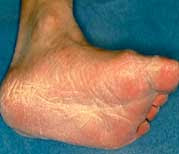
Athlete's foot may appear as areas of red skin, peeling and dry in one or both feet. Sometimes dry flakes may spread on the sides and top of the legs. The most common rash is localized on only the soles of the feet. The spaces between the toes of the fourth and fifth also may have some moisture, stripping, and dry flakes.There are three common types of athlete's foot:
1. soles of the feet, also called type "moccasin"2. between the toes, also called type "interdigital"3. inflammatory type or blistering (blistering)
The cases that are not public might look like bubbles (blisters) are small or large feet (called bullous tinea pedis), thick patches of red and dry skin, or calluses with redness. Occasionally, it may seem like just a mild, dry skin without the redness or inflammation.
Athlete's foot may present as a rash on one or both legs, and even involving the hands. This is a very common designation of athlete's foot. Fungal infections are called tinea manuum hand. The exact cause of why the infection usually affects only one hand is not known.
Athlete's foot may also be seen along with ringworm of the groin (especially in men) or the hands. It is useful to examine the legs whenever there is a fungal groin rash called tinea cruris. It is important to treat all areas of fungal infection at the same time to avoid re-infection.Are Athlete's Foot Contagious?
Athlete's foot may spread from person to person, but he did not always contagious. Some people may be more susceptible to the fungus that causes athlete's foot where others are more resistant (resistant). There are many households where two people (often husband and wife or children) who use the same bathing place for many years the fungus has not spread among them. The exact cause of this tendency or susceptibility to fungal infections is unknown. Some people seem more prone to fungal skin infections than others.What are the Causes of Rash-Rash Legs?
There are many possible causes of leg rashes. Athlete's foot is one of the causes are more common. Additional causes include infections of the skin (dermatitis) that irritate or contact (touching), allergic rashes from shoes or other creams, dyshidrotic eczema (allergic skin rash), psoriasis, keratodermia blenorrhagicum, yeast infections, and bacterial infections.
Your doctor can perform a simple test called a KOH, or potassium hydroxide for microscopic examination of fungi, in the office or laboratory to confirm the presence of a fungal infection. This test is carried out by using small pieces of skin were tested under a microscope. Many skin specialists (dermatologists) to conduct this test in their practice with results available within minutes. Rarely, a small piece of skin may be removed and sent for biopsy to help confirm the diagnosis.Athlete's Foot Care
Treatment athlete's foot can be divided into two parts. The first, and most important part, is to make the infected area less suitable for athlete's foot fungus to grow. This means keeping the area clean and dry.
Buy shoes that are leather or other material that can breathe. Shoe materials, like vinyl, which does not breathe cause your legs remain moist, providing an excellent area for mushroom breeding. Likewise, socks that can absorb like cotton which absorbs water from your legs may help.
Powders, especially powders of treatment (such as with miconazole or tolnaftate), can help keep your feet dry. Finally, your feet can be soaked in a solution of dry aluminum acetate (Burrow's solution or solution Domeboro). A home-made drugs from the marinade of white vinegar diluted using one part vinegar and about four parts water, once or twice per day as a bath-soaking feet for 10 minutes may be helpful in treatment.
The second part of the treatment is the use of creams and anti-fungal rinse-rinse. Many medications are available, including sprays and creams miconazole, clotrimazole, terbinafine (Lamisil), and ketoconazole shampoo and cream, and so on. Ask your doctor or pharmacist for a recommendation. Treatment for athlete's foot should generally be continued for four weeks, or at least one week after all symptoms of the skin has been lost.
The cases are more advanced or resistant of athlete's foot may require a trip of two to three weeks of an antifungal oral (pill) such as terbinafine, itraconazole (Sporanox) or fluconazole (Diflucan). Laboratory blood tests to make sure no liver disease may be necessary before taking these pills.
Topical corticosteroid creams (worn on the outside) can work as a fertilizer for mushrooms and may actually worsen skin fungal infections. These medications are topical steroids have no role in treating athlete's foot.
If the fungal infection has spread to the nails of the toes, the nails should also be treated to avoid re-infection of the feet. Often, the nails were initially ignored only to find the athlete's foot remained relapse. It is important to take care of all the mushrooms that look at the same time. Effective nail fungus treatment is more intensive and may require prolonged journeys (three to four months) of anti-fungal medications orally.When should I seek medical care?
If you notice any redness, increased swelling, bleeding, or if your infection does not disappear, see your doctor. If a bacterial infection also occurs, an antibiotic pills may be necessary. If you have a fungal nail involvement, are diabetic, or have a compromised immune system, you should also visit your doctor immediately for treatment.Possible Complications of Athlete's Foot
Not treated, athlete's foot can potentially spread to other body parts or other persons including family members. Fungus may spread locally to the legs, toe nails, hands, finger nails, and basically any body area.
This type of fungus is generally happy to live in the skin, hair, and nails. He did not attack the inside, go to the organs of the body, or go into the blood system.
Fungal infections of the nails is called tinea unguium or onychomycosis. Nail fungus is probably very difficult to treat. Antifungal pills may be necessary in cases of further infections toe nail fungus.
People with diabetes, HIV / AIDS, cancer, or other immune problems may be more prone to all kinds of infections, including fungi.
When skin is injured by the fungus, which protects the natural skin barrier broken. Bacteria and yeast, the yeast can then invade the broken skin. Bacteria can cause a foul odor. Bacterial infections of the skin and inflammation that result from it are known as cellulitis. This is especially more likely to occur in older people, individuals with diabetes, chronic leg swelling, or who have been issued vein-vein (such as for heart bypass surgery). Bacterial skin infections also occurred more frequently in patients with immune systems are impaired.
Which type of Doctor Treating Athlete's Foot
Experts in the skin (Dermatologists) specializing in the treatment of skin disorders, including athlete's foot. You may find a list of expert-certified dermatologists in http://www.aad.org. In addition, family medical doctors, internal medical doctors, doctors of children, podiatrists (foot doctors), and other doctors may also treat this common infection.
How Do I Prevent Future Infections?
Because some people are simply more susceptible to fungal infections, they are also more susceptible to repeated infections. Preventive measures include maintaining your legs clean and dry, moist environments avoiding prolonged, leave shoe-leather shoes and allow feet to breathe, avoiding the street barefoot, especially in public areas such as swimming pools and gyms, avoid contact with people known to be infected, and avoid the marinade and use of contaminated equipment in nail salons. Disinfect the old shoes and spray weekly or monthly periodic anti-fungal foot powder (Pedi-Foot Dry Powder) into the shoes can also be helpful.
It is imperative to bring the tools of your own nails, including nail files, nail salon to the public anywhere, unless you know the salon to practice strict sterilization equipment and or use of all supplies of disposables thrown away.
Use cotton socks whenever possible. Avoid roads at airports and public areas with bare feet. Make sure everyone from family members are affected as well treat their athlete's foot at the same time to avoid cross infections.